
Diabetes & High Risk Foot Care
Diabetes can affect the nerves and circulation in your feet, sometimes without causing obvious symptoms. Regular foot assessments help identify changes early, reducing the risk of ulcers, infection and more serious complications.
At Renew Podiatry, we provide comprehensive diabetes foot assessments in accordance with current Australian guidelines, helping you understand your individual level of risk and how to keep your feet healthy.
Whether you have recently been diagnosed with diabetes or have had it for many years, regular foot care is an important part of managing your overall health.

Protecting your feet starts with regular assessment
Why does diabetes affect the feet?

Diabetes may lead to changes that increase the risk of foot problems, including:
✔️ Reduced feeling (peripheral neuropathy)
✔️ Reduced blood flow (peripheral arterial disease)
✔️ Changes in foot shape and pressure
✔️ Slower wound healing
✔️ Increased risk of infection
Many people experience no symptoms until problems become advanced, which is why regular assessment is so important.
Who should have a diabetes foot assessment?

A diabetes foot assessment is recommended for:
✔️ People with Type 1 or Type 2 diabetes
✔️ Newly diagnosed patients
✔️ Anyone experiencing numbness, tingling or burning feet
✔️ People with previous foot ulcers
✔️ Patients with reduced circulation
✔️ Those with foot deformities or areas of high pressure
✔️ Anyone with concerns about their feet
What happens during your appointment?
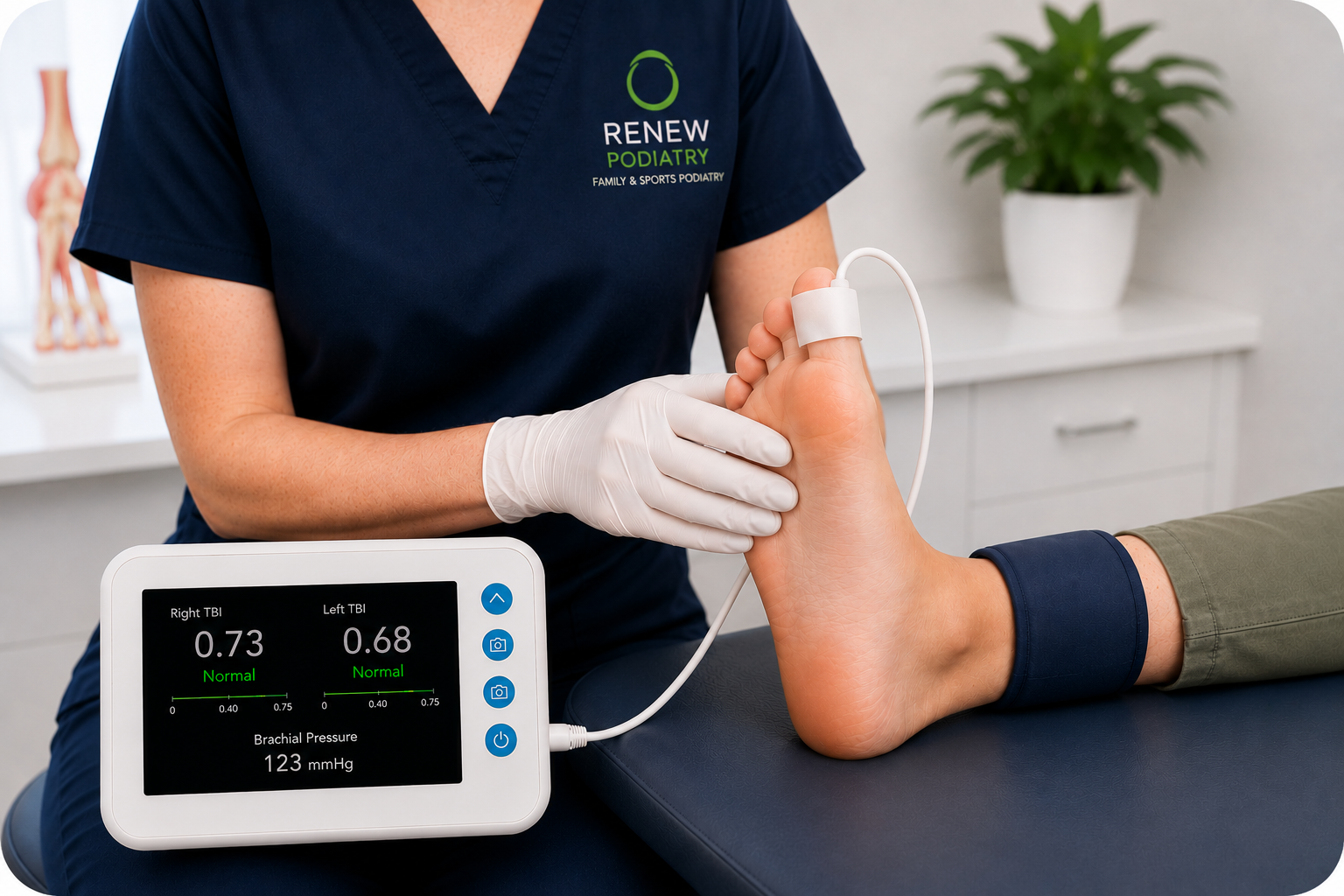
We will assess:
✔️ Medical history and diabetes history
✔️ Blood flow using Doppler ultrasound
✔️ Toe pressures
✔️ Ankle brachial indices
✔️ Ability to detect sensation (vibration, light touch)
✔️ Areas of high pressure and callus
✔️ Skin and nail health
✔️ Footwear assessment
✔️ Foot deformity and ulcer risk
✔️ Advice on self-care and footwear
You'll also receive an explanation of your findings and recommendations for ongoing care where appropriate.
Toe pressure (TBI) testing is our preferred method of assessing circulation in people with diabetes because it is generally more accurate than ankle pressure (ABI) measurements in this population. We also perform ABI testing, as the combination of both assessments provides a more complete picture of lower limb circulation and helps identify peripheral arterial disease.
Understanding your risk
Following your assessment, we'll explain your individual foot risk and recommend an appropriate review schedule.
Depending on your findings, this may range from annual assessments for lower-risk patients through to more frequent monitoring for those with reduced circulation, neuropathy or a previous history of ulceration.
Early identification of changes allows treatment to begin before more serious complications develop.
Treatment and ongoing care
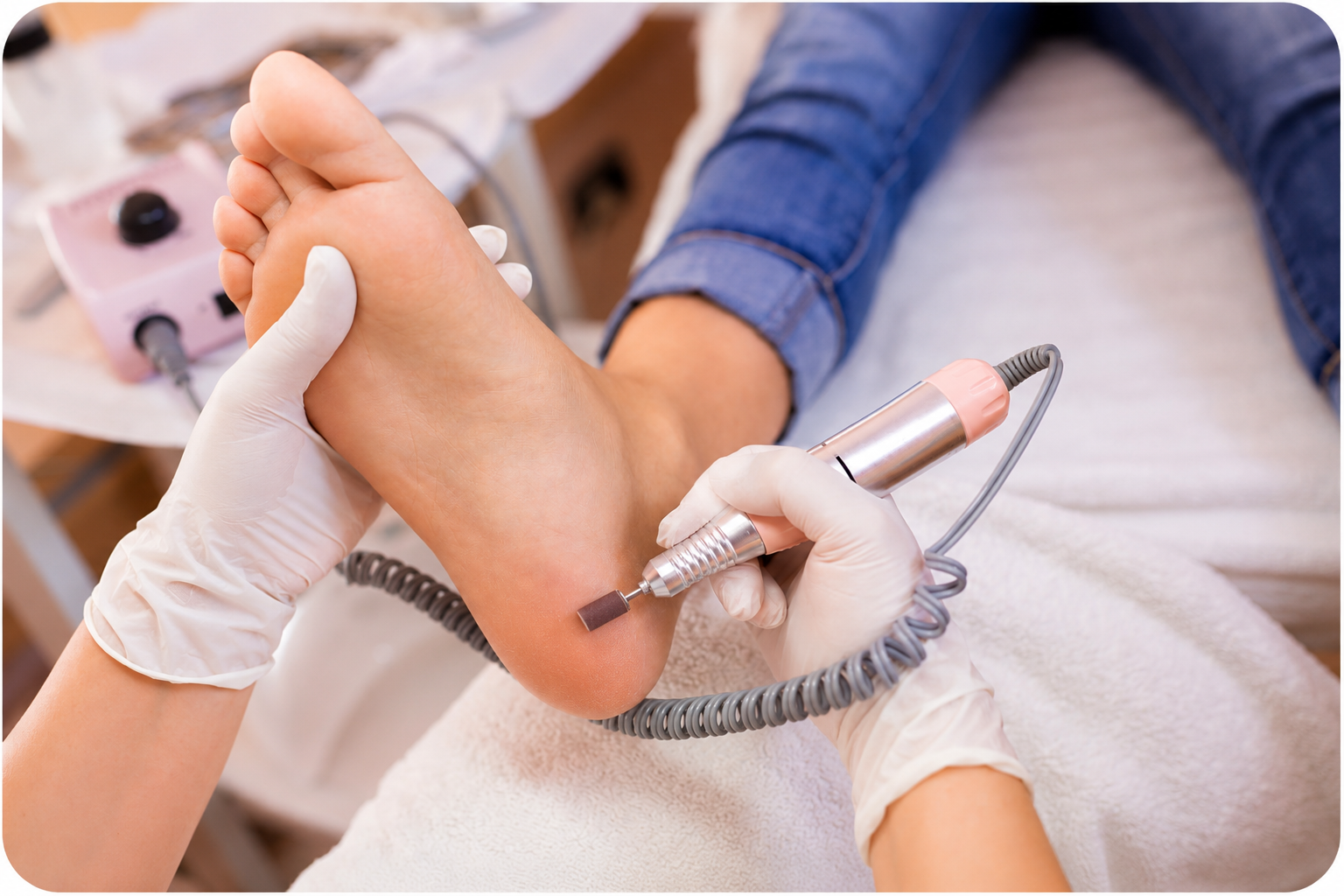
Management may include:
🟢 Routine podiatry care
🟢 Callus reduction
🟢 Nail care
🟢 Pressure redistribution and offloading
🟢 Footwear advice
🟢 Orthotic assessment where appropriate
🟢 Wound care (where appropriate)
🟢 Education to help prevent future complications
🟢 Communication with your GP or specialist when required
FAQS
-
Most people with diabetes should have their feet assessed at least once a year. If you have reduced sensation, poor circulation, previous ulcers or are considered high risk, more frequent reviews may be recommended.
-
Yes. Diabetes-related nerve and circulation changes often develop gradually without causing pain or obvious symptoms.
-
Peripheral neuropathy is damage to the nerves supplying your feet. It can reduce your ability to feel pain, heat or injury, increasing the risk of unnoticed wounds.
Peripheral neuropathy (nerve damage) doesn't always cause symptoms. Some people notice numbness or reduced sensation, while others experience common symptoms such as burning feet, pins and needles, sharp or stabbing pains, tingling, altered sensation, or restless legs—particularly at night. Because neuropathy can develop gradually, regular neurological assessments are important, even if your feet feel normal.
-
A Doppler ultrasound allows us to assess blood flow in the arteries supplying your feet and legs. This helps identify reduced circulation that may require further investigation or monitoring.
-
The Ankle-Brachial Index (ABI) and Toe-Brachial Index (TBI) compare blood pressure measurements in your arms, ankles and toes to assess circulation. These tests help identify peripheral arterial disease.
-
Thick callus can significantly increase pressure beneath the foot. In people with diabetes and reduced sensation, this can increase the risk of skin breakdown and ulceration.
-
Because we perform a thorough neurological and vascular assessment during your initial diabetes appointment, there is generally not enough time for routine nail care. If nail treatment is required, this can be arranged at a separate appointment.
-
No referral is required to book an appointment privately.
If you're attending under a GP Management Plan (formerly EPC/CDM), you'll need a valid referral from your GP before your appointment. This will allow you to claim a Medicare rebate.
Ready to take the next step?
Regular assessment plays an important role in protecting your foot health. We're here to help detect problems early and reduce your risk of complications.