
Ingrown Toenails & Nail Surgery
Effective treatment for painful ingrown toenails
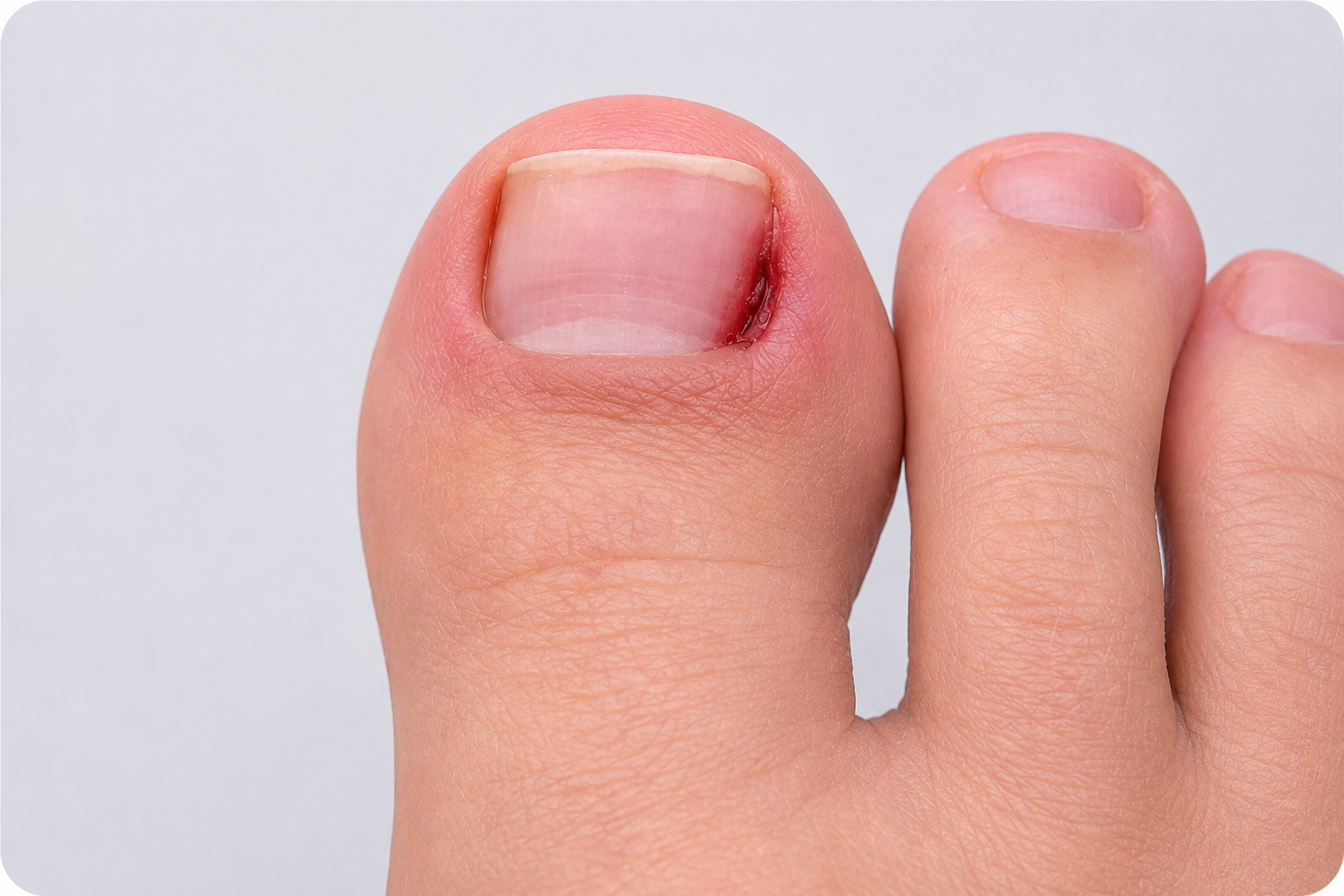
An ingrown toenail can quickly turn from a minor irritation into a painful condition that makes walking, exercising and even wearing shoes uncomfortable.
At Renew Podiatry, we aim to treat the problem early whenever possible. Many ingrown toenails can be managed conservatively without surgery, while others may benefit from Onyfix® nail correction or a minor nail procedure to provide long-term relief.
During your assessment, we'll determine which treatment is most appropriate for your individual situation.
What is an ingrown toenail?
An ingrown toenail occurs when the edge of the nail presses into or pierces the surrounding skin. This commonly affects the big toe but can occur on any toe.
Once the skin becomes irritated, inflammation develops. If left untreated, bacteria can enter the area, leading to infection.
Early treatment is usually simpler and more comfortable than waiting until the toe becomes severely painful or infected.
Signs and symptoms
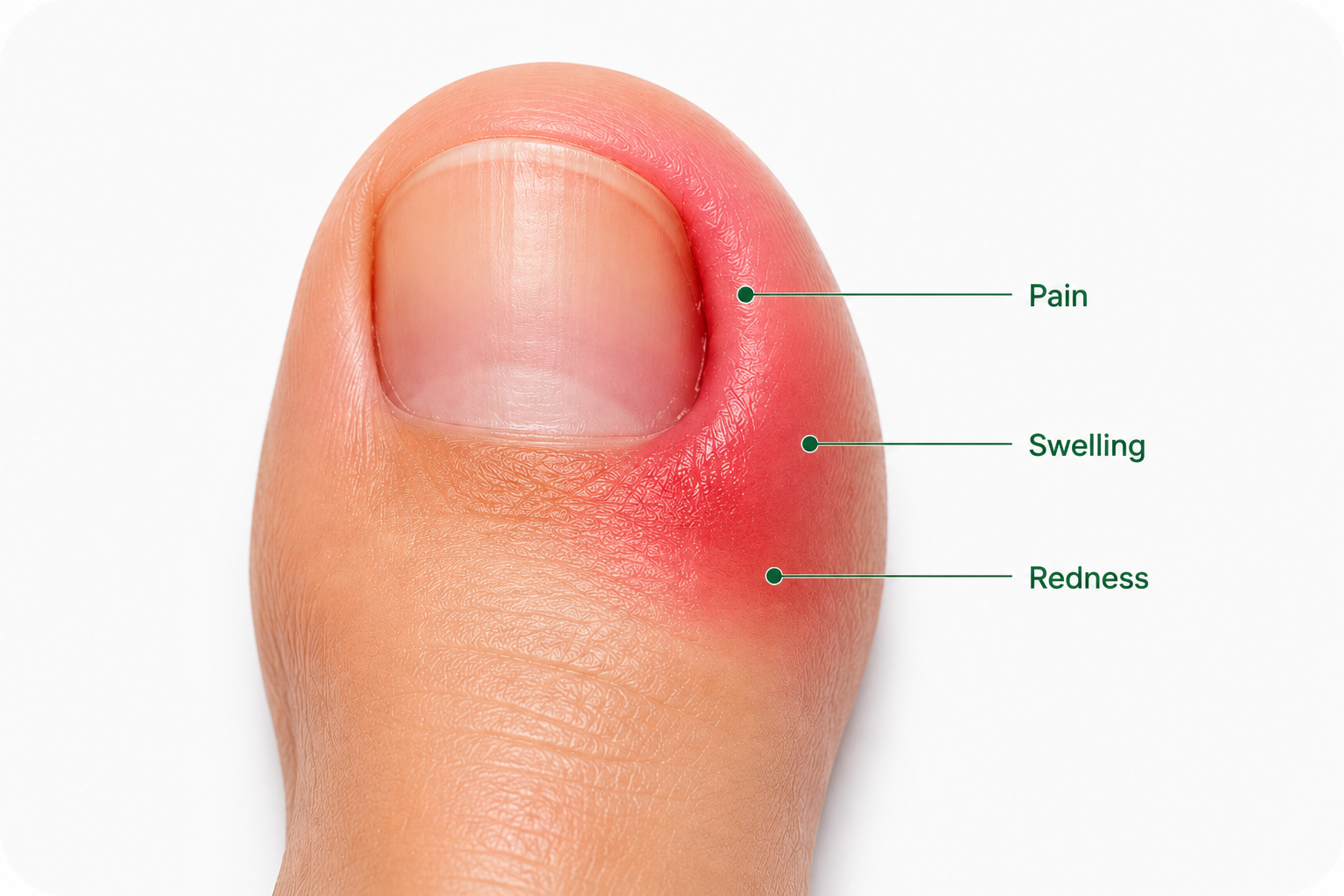
You may notice:
✔ Pain along one or both sides of the nail
✔ Redness and swelling
✔ Tenderness when pressure is applied
✔ Difficulty wearing enclosed shoes
✔ Bleeding or overgrown skin around the nail
✔ Pus or discharge if infection is present
✔ Pain while walking or playing sport
Why do ingrown toenails develop?
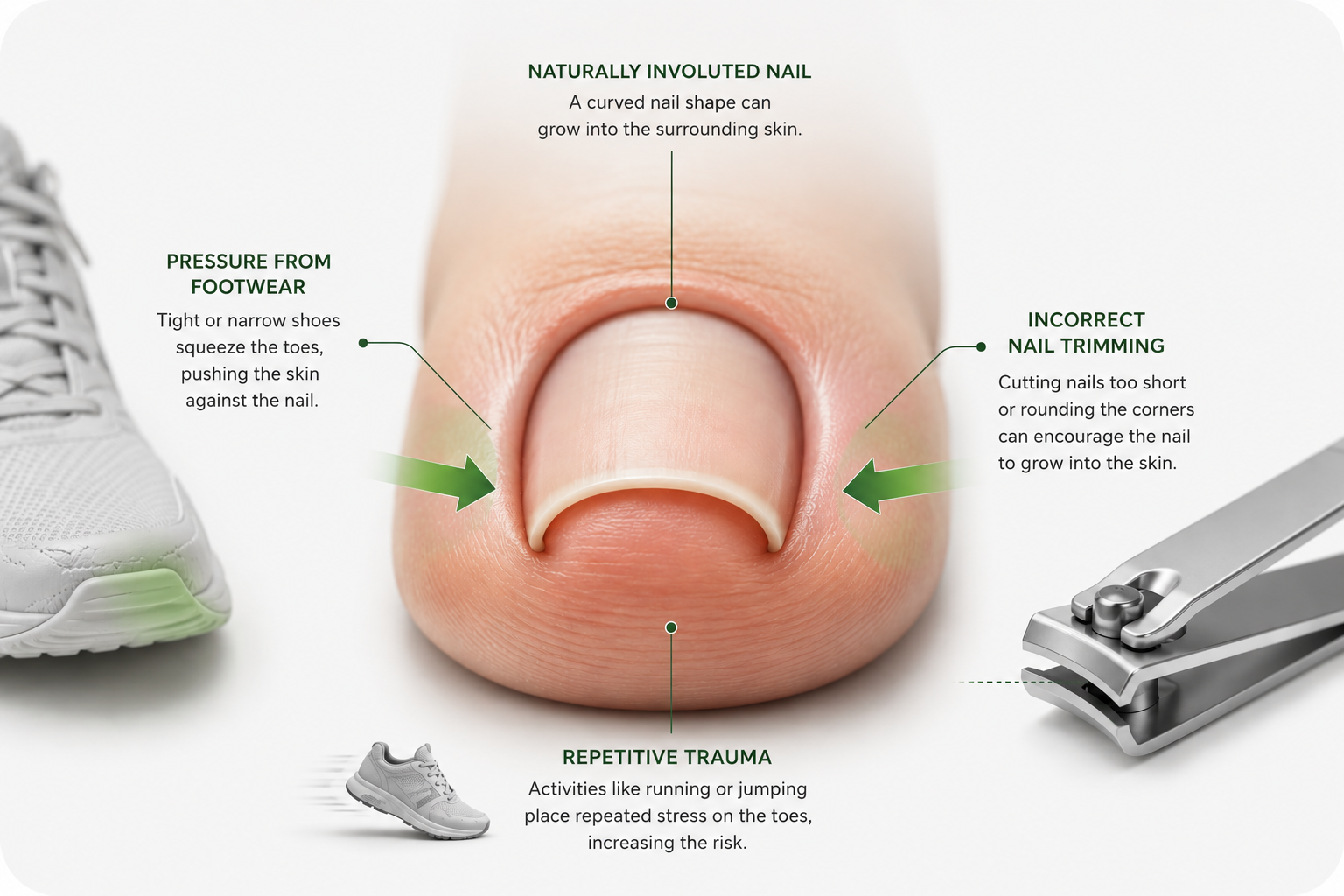
There are many reasons why an ingrown toenail may occur, including:
Naturally curved or involuted nails
Incorrect nail trimming
Tight or narrow footwear
Repetitive sporting activities
Toe injuries
Thickened nails
Sweaty feet
Hereditary nail shape
Often, several of these factors contribute together.
Conservative treatment
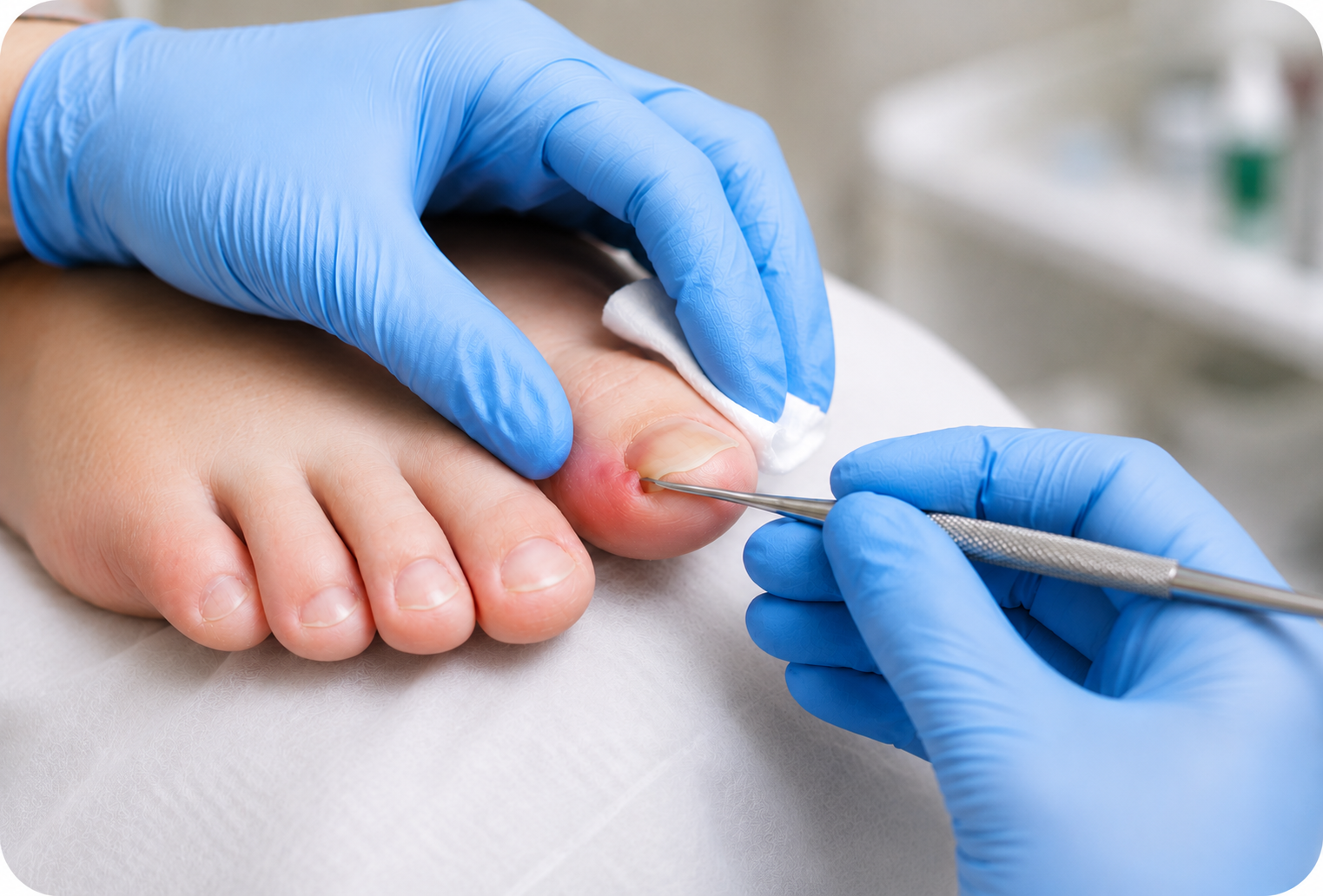
Many ingrown toenails can be treated without surgery, particularly when addressed early.
Treatment may include:
Careful removal of the offending nail spike
Reducing thickened or curved nails
Removing debris beneath the nail
Protective dressings
Pressure-relieving padding
Footwear advice
Home care instructions
Monitoring healing
Many patients experience immediate relief once the nail spike has been removed.
Onyfix® Nail Correction
For suitable patients, Onyfix provides a non-surgical way of gradually correcting the shape of the nail as it grows.
It may be recommended for:
Recurrent ingrown toenails
Curved or involuted nails
Patients wishing to avoid surgery
Children
People with ongoing discomfort due to nail shape
If the toe is significantly inflamed or infected, this is treated first. Once the toe has settled, Onyfix can often be applied at a later appointment to help reduce the risk of recurrence.
When is nail surgery recommended?
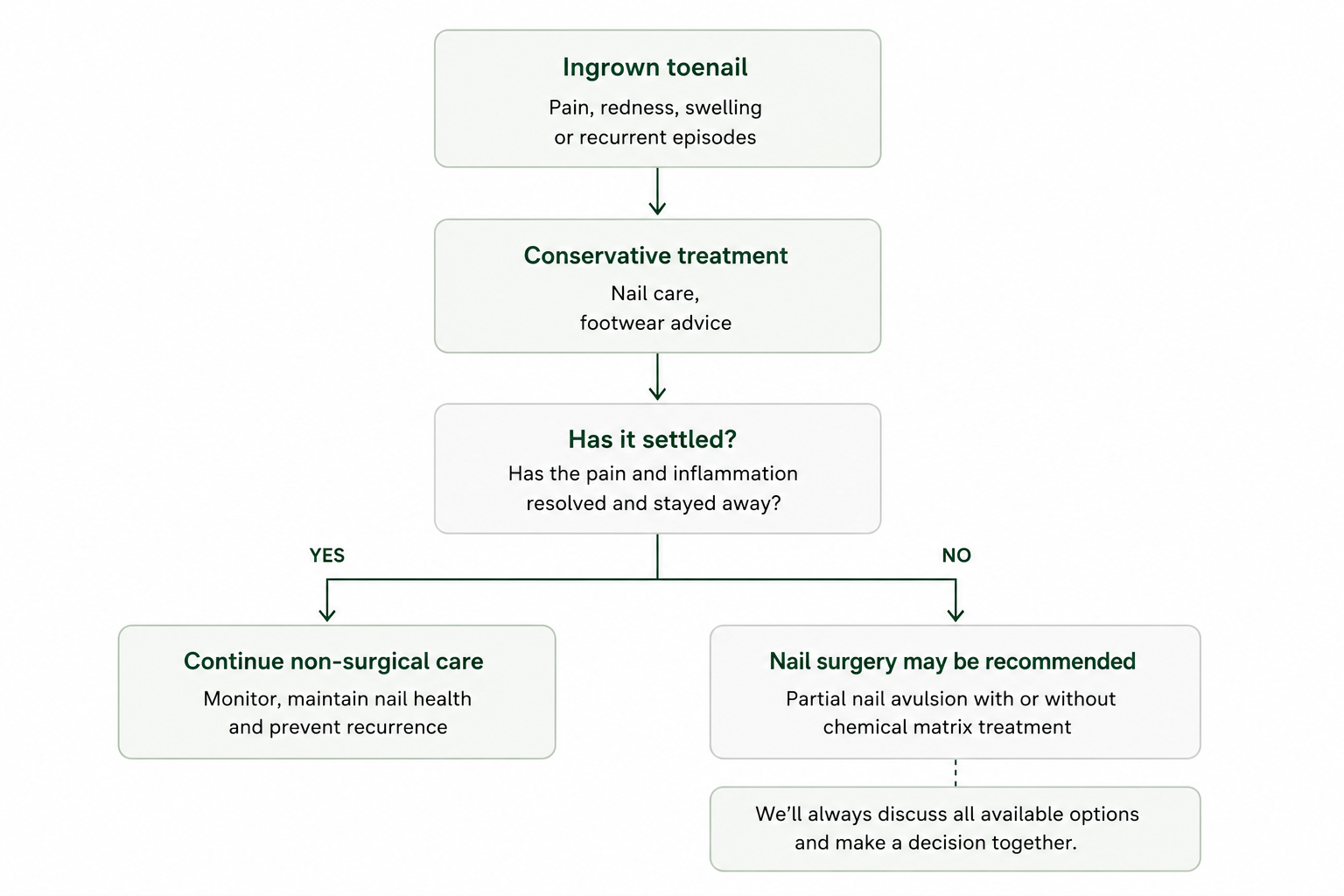
Sometimes surgery provides the most reliable long-term solution.
This may be recommended if:
Ingrown toenails keep returning
Conservative treatment has failed
The nail repeatedly becomes infected
The nail is severely curved
Pain is persistent despite previous treatment
We'll always discuss all available options before recommending surgery.
What does nail surgery involve?
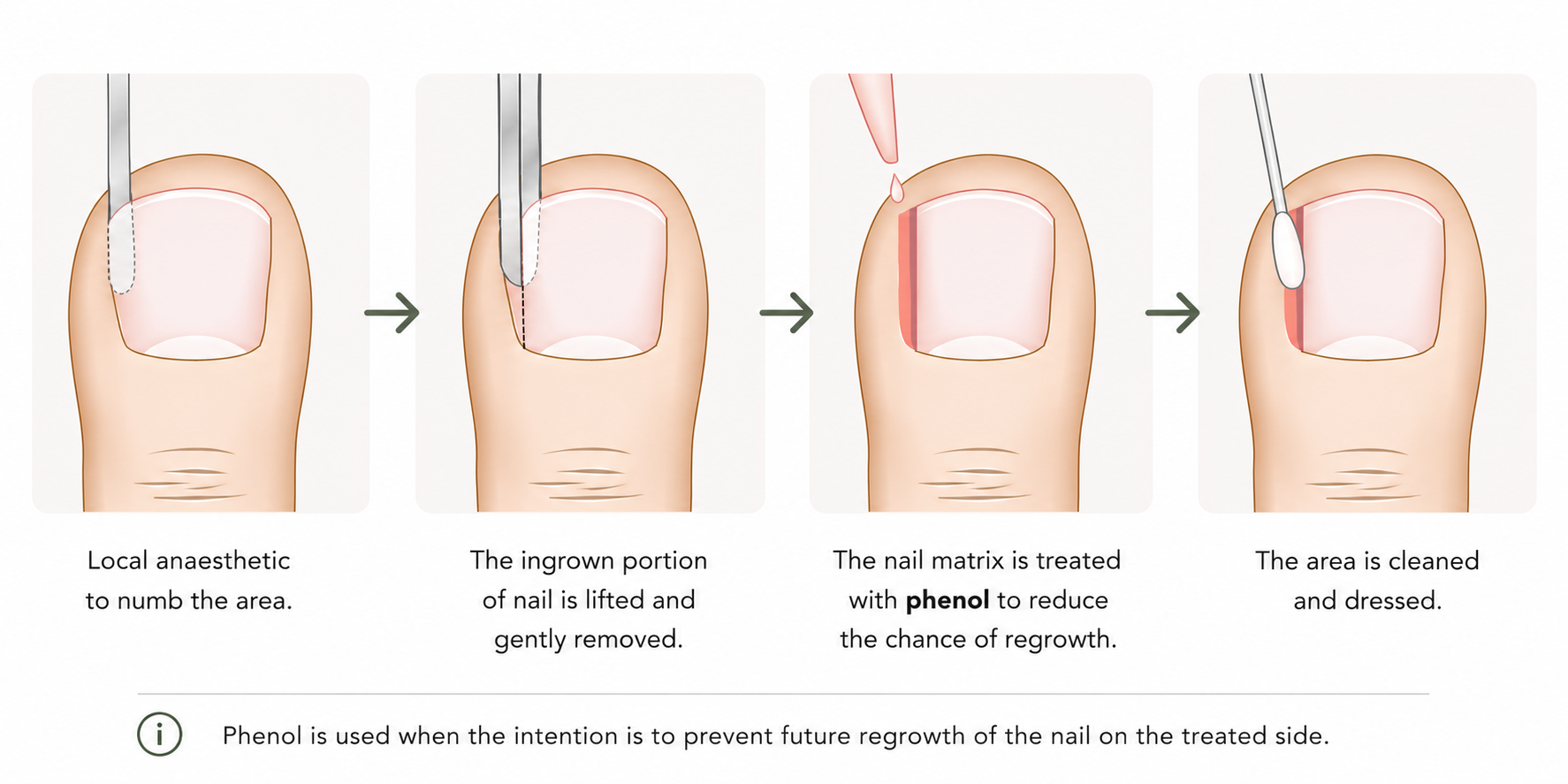
A partial nail avulsion is a minor procedure performed in the clinic. The most common procedure. Only the offending edge of the nail is removed while preserving the remainder of the nail.
Numbing the toe with local anaesthetic.
Removing only the narrow edge of the offending nail.
Applying a chemical (phenol) to prevent that edge growing back.
Dressing the toe before you leave the clinic.
Only the problematic edge of the nail is removed, leaving most of the nail looking normal.
The procedure typically takes around 30–45 minutes.
A Total nail avulsion is when the entire nail is removed.
This may be recommended for:
Severely thickened or distorted nails
Extensive nail disease or trauma
When removing only part of the nail is unlikely to resolve the problem
Depending on the reason for surgery, the nail may be allowed to regrow or the nail matrix may be treated to prevent future nail growth. We'll discuss the most appropriate option during your consultation.
FAQS
-
Not always.
Many ingrown toenails improve simply by removing the offending nail edge.
Antibiotics are generally only required when there is spreading skin infection (cellulitis), significant surrounding infection, or when recommended by your GP. Removing the source of irritation is usually the most important part of treatment.ion text goes here
-
Description text goes hereAlthough not every ingrown toenail can be prevented, you can reduce your risk by:
Wearing shoes with adequate toe room
Avoiding cutting nails too short
Trimming nails straight across where appropriate
Seeking treatment early if discomfort develops
Managing recurrent curved nails before they become painful
-
The local anaesthetic injection causes brief discomfort, but once the toe is numb, the procedure itself should not be painful.
-
Usually not. In most cases, only the narrow edge causing the problem is removed.
-
Yes. Nail surgery is commonly performed in children and teenagers when conservative treatment has not been successful. description
-
Partial nail avulsion with phenol is considered one of the most effective long-term treatments for recurrent ingrown toenails and has been shown to significantly reduce the risk of recurrence compared with surgery alone.
-
Most people can return to work or school within a day or two, although healing of the toe itself generally takes several weeks. Healing time varies depending on the procedure performed, your general health, and how closely the aftercare instructions are followed.
-
Conservative treatment and Onyfix can significantly reduce the risk of recurrence, but they do not permanently prevent it.
A partial nail avulsion with phenol offers the lowest recurrence rate because the treated edge of the nail is permanently prevented from regrowing.
-
We recommend arranging for someone to drive you home after your procedure. Following nail surgery, your toe will be numb from the local anaesthetic and covered with a bulky dressing, which may affect your ability to safely control a vehicle—particularly if the procedure is performed on your driving foot.
Once the anaesthetic has completely worn off and you feel able to safely operate the pedals, you can usually return to driving. If you're unsure, it's safest to avoid driving until you feel confident you can control the vehicle normally.
Why choose Renew Podiatry?
At Renew Podiatry, treatment is focused on identifying the underlying cause—not simply trimming the nail.
We'll discuss all appropriate options, whether that's:
Conservative treatment
Onyfix® nail correction
Ongoing nail management
Permanent nail surgery
Our goal is to relieve your pain while reducing the chance of the problem returning.
Ready to take the next step?
Whether your symptoms have just started or you've been dealing with recurring problems, we'll assess your toe, explain your treatment options, and recommend the approach that's most appropriate for you.