
Dry Needling
Persistent muscle tightness and painful trigger points can contribute to foot, ankle and lower limb pain. Dry needling is an evidence-based treatment that can help reduce pain, improve muscle function and complement your rehabilitation program.
At Renew Podiatry, dry needling is used alongside a thorough assessment and personalised treatment plan—it is rarely used as a standalone treatment.
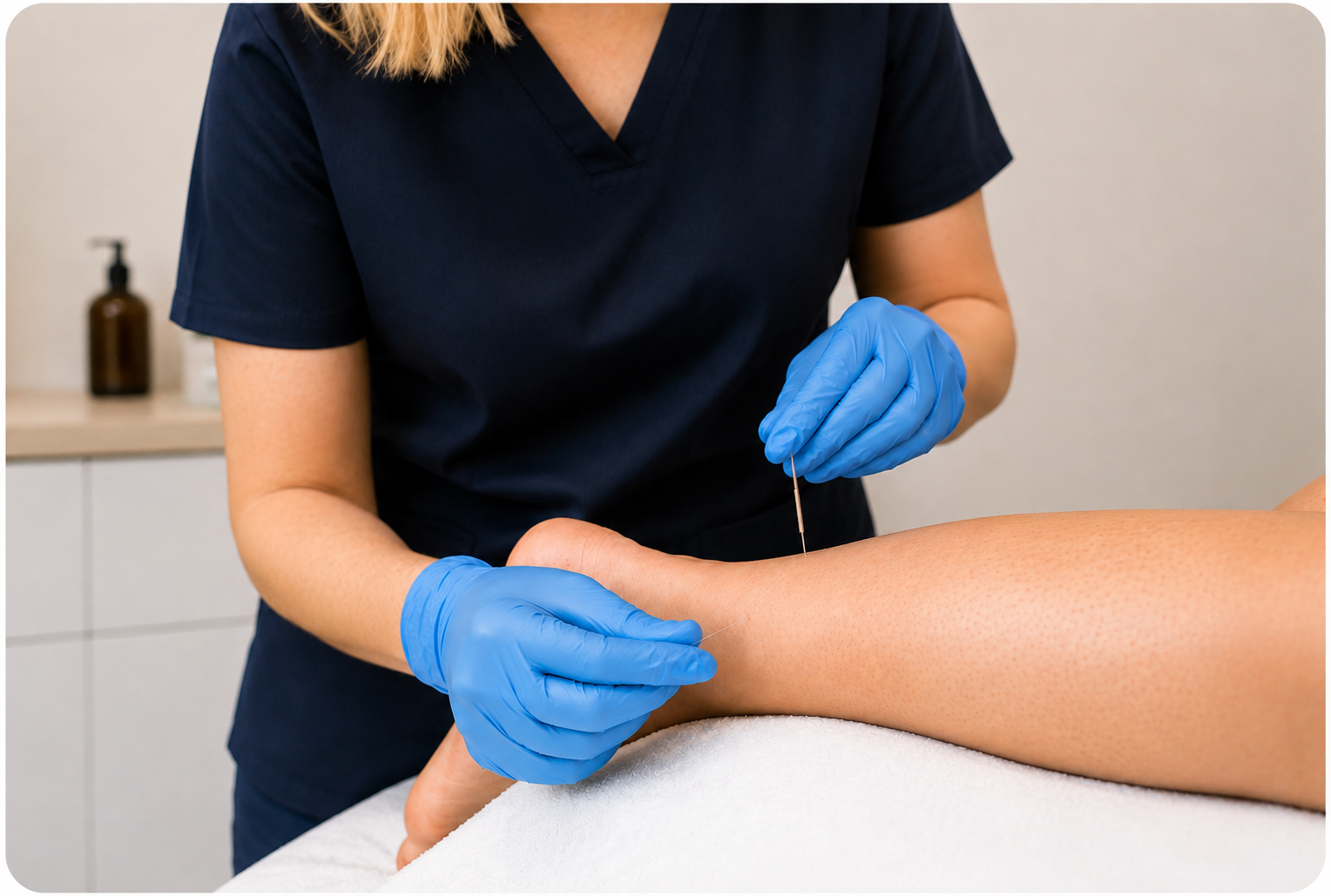
What is dry needling?
Dry needling involves inserting very fine, sterile needles into tight muscles and myofascial trigger points. Unlike injections, nothing is injected through the needle.
The aim is to reduce muscle tension, decrease pain and improve movement by targeting dysfunctional muscle tissue.
Treatment is always tailored to your diagnosis and may be combined with exercise therapy, footwear advice, orthotic therapy or shockwave therapy where appropriate.
How does dry needling work?
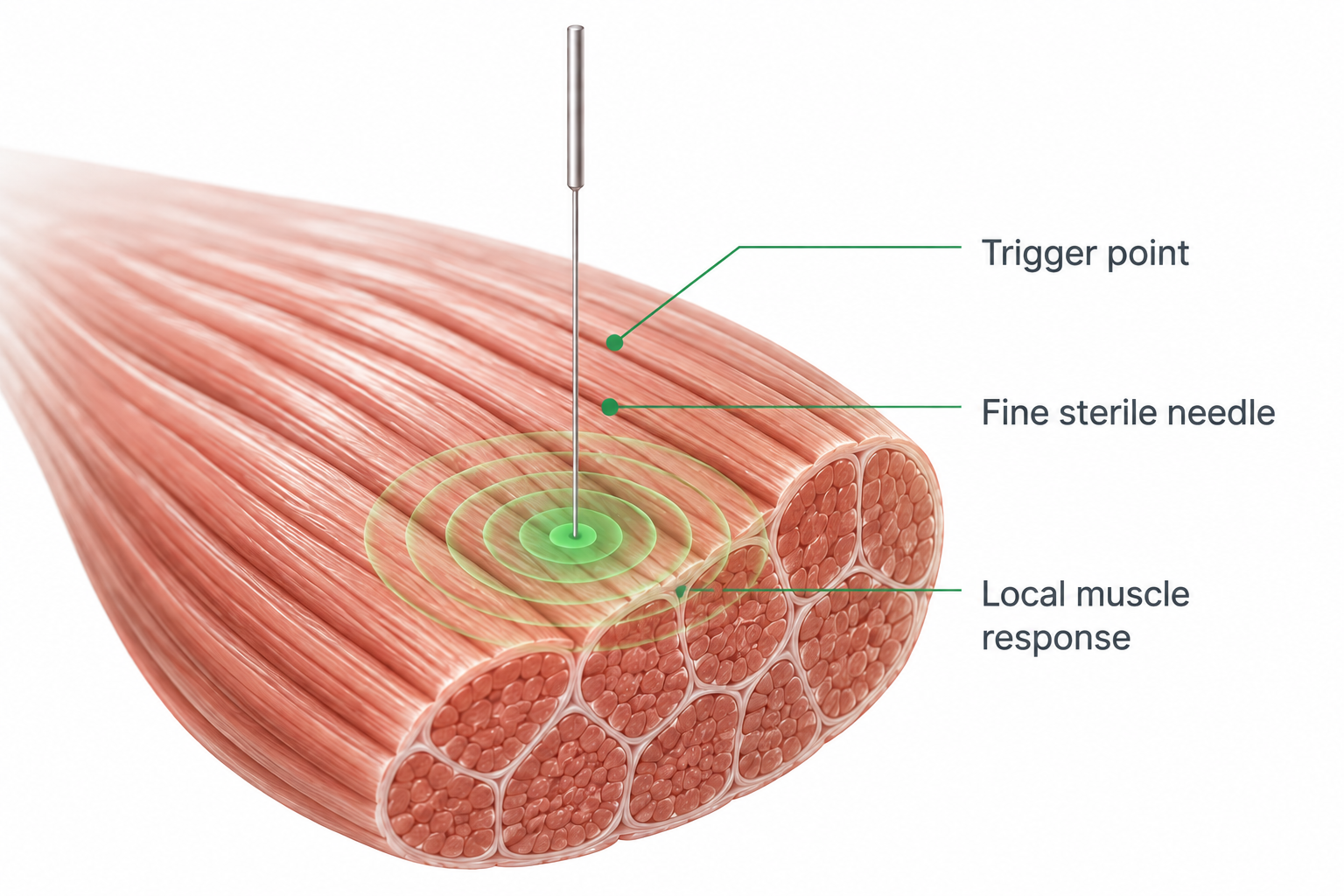
Research suggests dry needling may help by:
reducing muscle trigger point activity
improving local blood flow
reducing pain sensitivity
improving muscle function
allowing more comfortable movement and rehabilitation.
For many conditions, the best outcomes occur when dry needling is combined with an appropriate strengthening and rehabilitation program
What conditions can dry needling help?
Dry needling may be beneficial for a range of muscle-related conditions. When appropriate, we commonly incorporate dry needling into the management of:
✅ Plantar heel pain
✅ Achilles tendinopathy
✅ Calf muscle tightness
✅ Running-related muscle pain
What happens during treatment?
After assessing your condition, very fine sterile needles are inserted into specific muscles.
You may experience:
a brief pinching sensation
a muscle twitch response
temporary aching around the needle.
Treatment usually takes 10–20 minutes as part of your consultation.
Does dry needling hurt?
Most patients tolerate dry needling well.
Some muscles are more sensitive than others, but discomfort is usually brief and settles quickly. A muscle twitch can feel unusual but is a normal response and often indicates the trigger point has been stimulated.
When might dry needling not be suitable?
Dry needling may not be appropriate if you:
are uncomfortable with needles
have an active skin infection over the treatment area
have certain bleeding disorders
are taking some anticoagulant medications (individual assessment required)
are pregnant (depending on the treatment area).
Suitability is always assessed during your appointment.
Possible side effects
Side effects are usually mild and short-lived.
They may include:
temporary muscle soreness (24–48 hours)
minor bruising
small drops of bleeding
fatigue
temporary aggravation of symptoms.
Serious complications are rare.
FAQS
-
Yes. Dry needling is often combined with strengthening exercises, stretching, footwear advice and orthotic therapy where appropriate.
-
No.
Although both treatments use similar needles, dry needling is based on modern anatomy and the treatment of muscles and myofascial trigger points. Acupuncture is based on traditional Chinese medicine principles and meridian theory.
-
Some muscle soreness is common for 24–48 hours and is similar to the feeling after a strenuous workout. This usually settles without treatment.
Ready to take the next step?
If muscle tightness or trigger points are contributing to your foot or lower limb pain, an assessment can determine whether dry needling is an appropriate part of your treatment plan.