
Fungal nails & Treatment
Thick, Discoloured or Brittle Toenails?
A fungal nail infection (onychomycosis) is one of the most common causes of thickened, discoloured and damaged toenails. It can affect one nail or several and often develops slowly over months or years.
Although fungal nails are usually not dangerous, they rarely improve without treatment and can gradually become thicker, more brittle and more difficult to manage.
At Renew Podiatry, we'll determine whether your nail changes are likely to be caused by fungus or another condition before discussing the treatment options most appropriate for you.
On this page
What is a fungal nail infection?
What causes fungal nails?
How do you catch it?
Signs and symptoms
What happens inside the nail?
Do I need a test?
Treatment options
Frequently asked questions
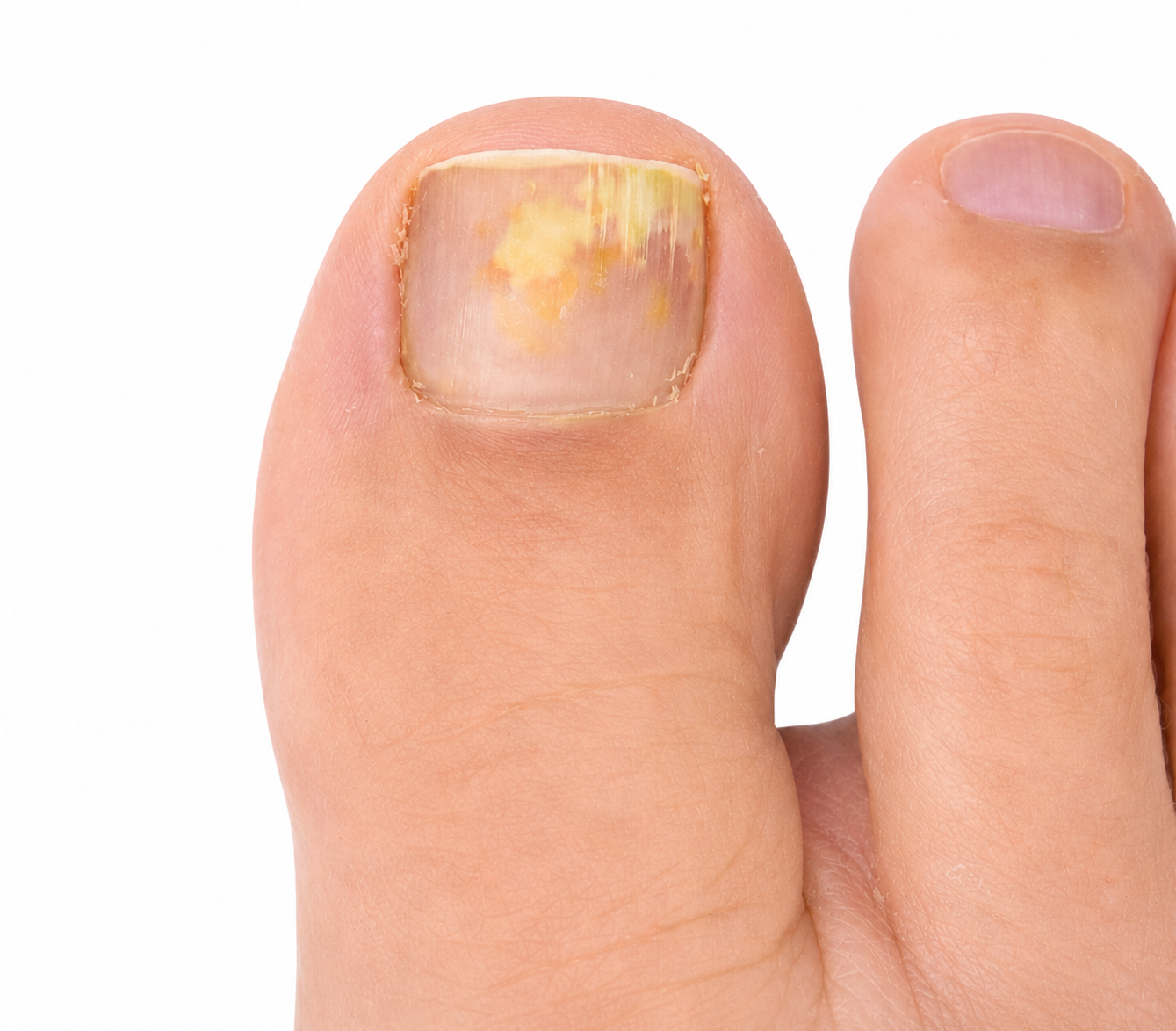
What is a fungal nail infection?
A fungal nail infection occurs when microscopic fungi invade the nail through small cracks in the nail plate or skin around the nail.
The most common fungi responsible are dermatophytes, particularly Trichophyton rubrum, which causes the majority of fungal toenail infections worldwide.
Yeasts (such as Candida) and moulds can also infect nails, although these are less common.
The infection often begins at the free edge of the nail before gradually spreading towards the nail root.
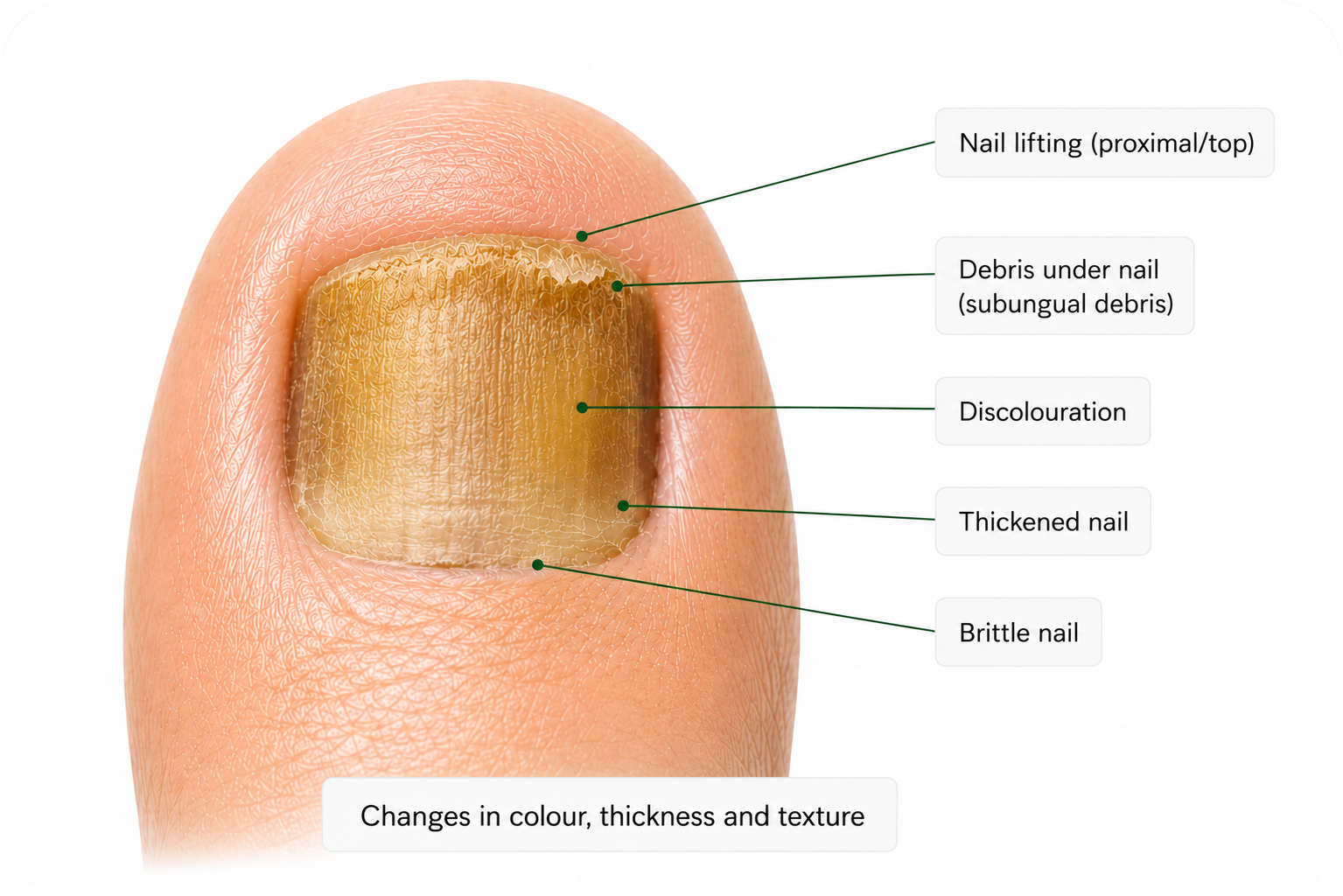
Common signs and symptoms
Everyone's nail looks slightly different, but common features include:
✓ Yellow, white or brown discolouration
✓ Thickened nails
✓ Brittle or crumbly edges
✓ Nail lifting away from the nail bed (onycholysis)
✓ Debris building underneath the nail
✓ Distorted nail shape
✓ Difficulty trimming the nail
✓ Occasionally discomfort from pressure inside shoes
Pain is not usually caused by the fungal infection itself. When discomfort does occur, it is most commonly due to pressure from subungual debris beneath the nail plate or from the thickened nail pressing against footwear.
How do people catch fungal nails?
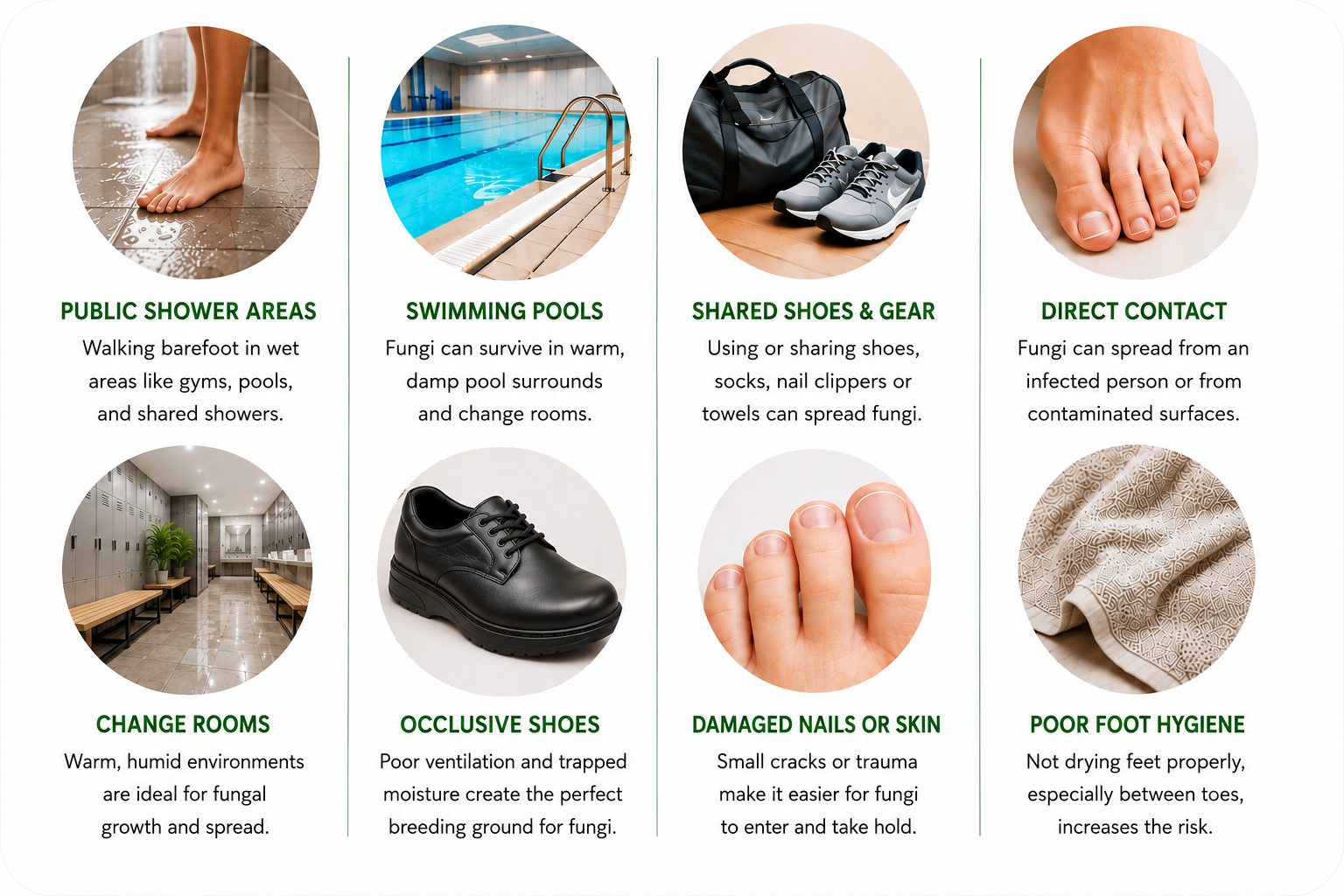
You may be more likely to develop a fungal nail infection if you:
✓ Have athlete's foot
✓ Walk barefoot around swimming pools, gyms or communal showers
✓ Wear hot, sweaty footwear for long periods
✓ Have damaged the nail from sport or trauma
✓ Have diabetes or poor circulation
✓ Have a weakened immune system
✓ Have a family history of fungal infections
What happens inside the nail?
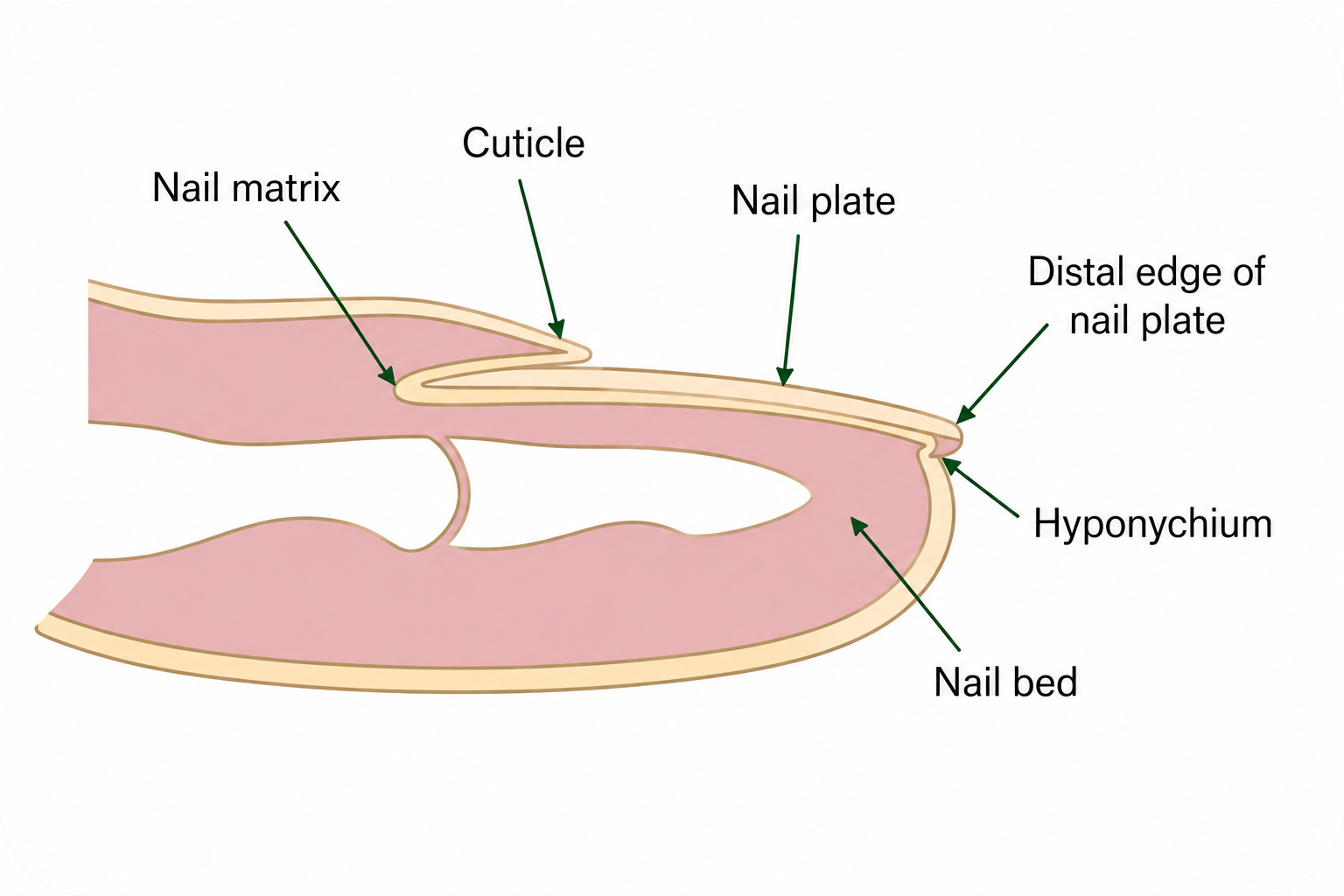
The nail grows from specialised cells called the nail matrix, located beneath the skin at the base of the nail.
As the nail grows forward, fungus can invade the underside of the nail plate and nail bed. Over time this may lead to:
thickening of the nail
lifting of the nail from the nail bed
crumbly or brittle nail tissue
debris collecting beneath the nail
distortion of the normal nail shape
Long-standing fungal infections can sometimes affect the nail matrix itself. When this occurs, the new nail may grow with a permanently thickened, ridged or irregular appearance, even after the infection has been successfully treated. Early treatment may reduce the risk of permanent nail changes, although not all nail deformity is reversible.
Is it definitely fungus?
Not every thick or discoloured nail is caused by fungus.
Similar changes can occur because of:
repeated shoe pressure
previous injury
psoriasis
ageing
inflammatory nail diseases
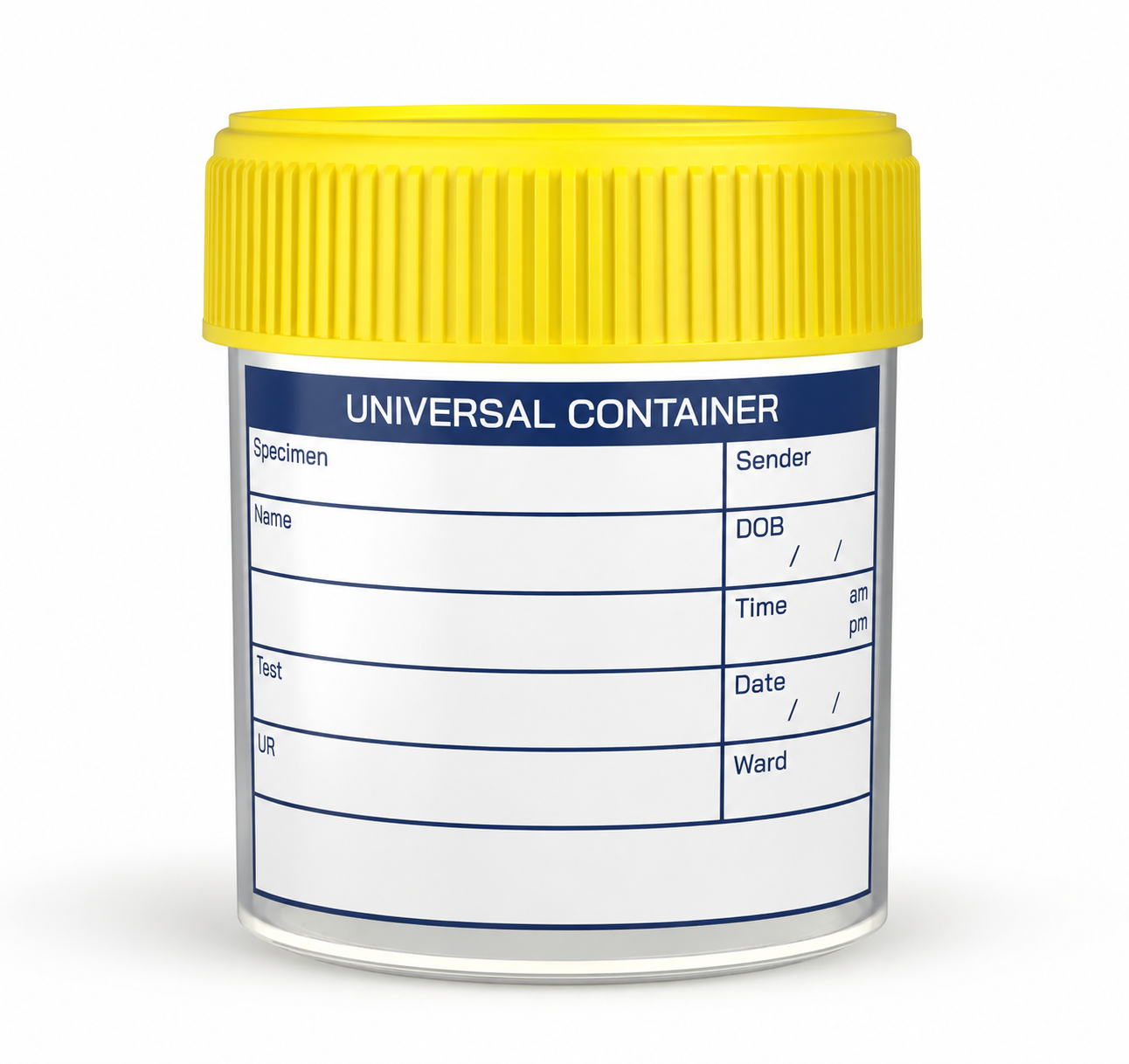
In some cases we may recommend laboratory testing to confirm the diagnosis before commencing treatment, particularly if oral medication is being considered.
If you have thickened, discoloured or brittle toenails, we can assess whether the changes are likely to be caused by fungal infection or another condition, discuss appropriate treatment options and help you achieve the healthiest nail possible.
Treatment options
Treatment depends on:
Which fungus is causing the infection (if testing has been performed)
Where the fungus is located within the nail (for example, whether it is confined to the end of the nail or has spread towards the nail matrix)
How many nails are affected
How much of each nail is involved
Whether the nail matrix is involved
How thick the nail has become
Your age
Whether you are pregnant or breastfeeding
Your overall health and medical history
Current medications and potential drug interactions
Previous treatments you've tried
Nail trimming and burring
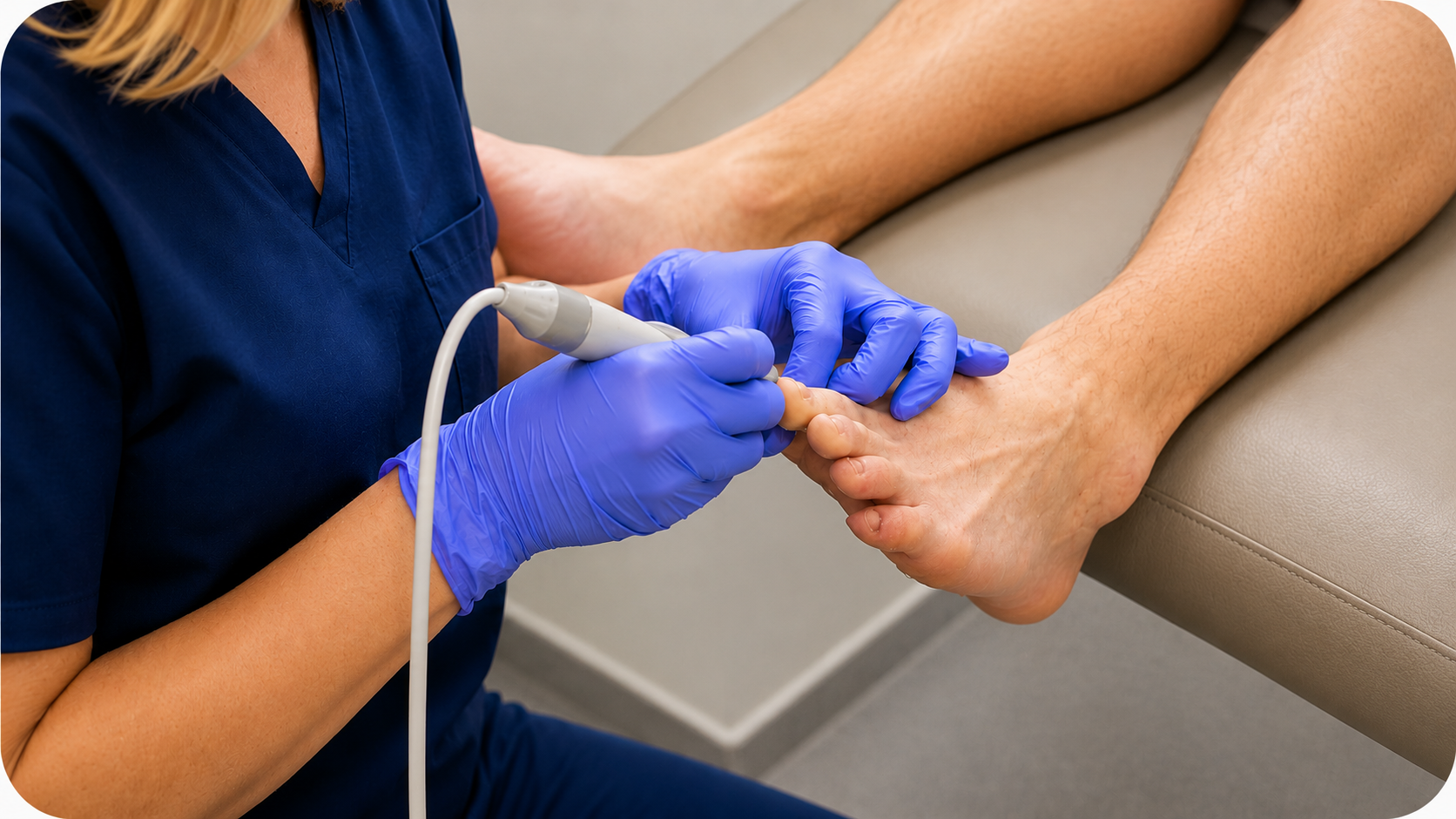
Regular professional trimming and thinning of thickened nails can:
✓ reduce pressure and discomfort
✓ improve shoe comfort
✓ improve the appearance of the nail
✓ help topical medications penetrate more effectively
Although nail reduction alone usually won't eliminate the infection, it is often an important part of treatment.
Topical antifungal treatments
Topical medications may be suitable when:
only part of the nail is affected
the infection hasn't reached the nail matrix
oral medication isn't appropriate
These treatments usually need to be applied consistently for many months while a healthy new nail grows.
Oral antifungal medication
Oral antifungal medication is generally the most effective treatment for many fungal toenail infections, particularly when several nails are affected or the infection involves the nail matrix.
Treatment is prescribed by your GP and may require assessment of your medical history and, in some cases, blood tests before or during treatment.
Even after successful treatment, the damaged nail still needs time to grow out.
Laser treatment
Some clinics offer laser treatment for fungal nails. Laser treatment is a non-invasive option for managing fungal nail infections. It works by directing concentrated light energy through the nail to target fungal organisms beneath the nail plate. Treatment is generally well tolerated, with no downtime, and is suitable for many people who are unable or prefer not to apply topical treatments or take oral antifungal medication.
We'll help you understand the advantages and limitations of each option so you can choose the treatment that's right for you.
Preventing recurrence
Fungal nail infections can return, even after successful treatment.
You can reduce the risk by:
✓ Treating athlete's foot promptly
✓ Keeping feet clean and dry
✓ Changing socks daily
✓ Rotating footwear
✓ Wearing thongs in communal showers and pools
✓ Avoiding sharing nail clippers or towels
✓ Replacing old footwear if heavily contaminated
Ready to take the next step ?
These factors help determine whether topical treatment, oral medication, regular nail reduction, or a combination of treatments is likely to provide the best outcome.